- The project aims to design and optimize a heat pump system for a reference house in Detroit, MI, contributing to the U.S. Department of Energy’s “Net-Zero Carbon Emission by 2050” goal by reducing CO₂ emissions from residential heating and air-conditioning.
- The heat pump uses R-450A, a low-GWP refrigerant that reduces CO₂ emissions by 738 kg compared to traditional refrigerants like R-410A. The system also features a Copeland ZB19KCE-TFD compressor, optimized for building load management.
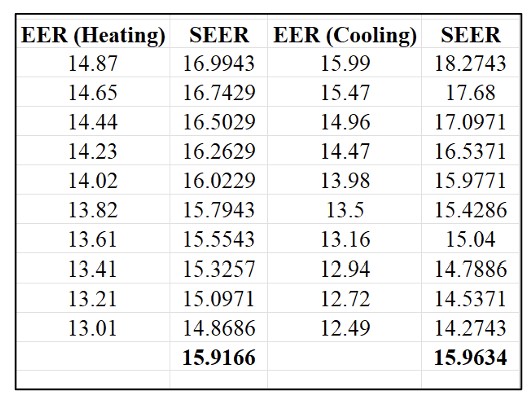
- The heat pump’s isentropic efficiency is 61%, with a COP of 3.5 and SEER values of 15.91 (heating) and 15.96 (cooling), exceeding U.S. government energy efficiency standards. A flash tank inclusion increased COP by 5.3%, boosting overall system efficiency.
- The optimized design achieves up to a 35% reduction in electricity costs due to improved efficiency and optimal heat pump sizing, supporting energy conservation and cost savings for residential users.
- Future research will focus on further optimization of the heat pump cycle, exploring additional low-GWP refrigerants like R-440A and R-430A, and assessing the effects of compressor oversizing and CO₂ emissions across different refrigerants for more comprehensive environmental impact analysis.
Skills: Design and Modeling of heat pump- EES Software